
Benefits of Hot Pilates (According to Science)
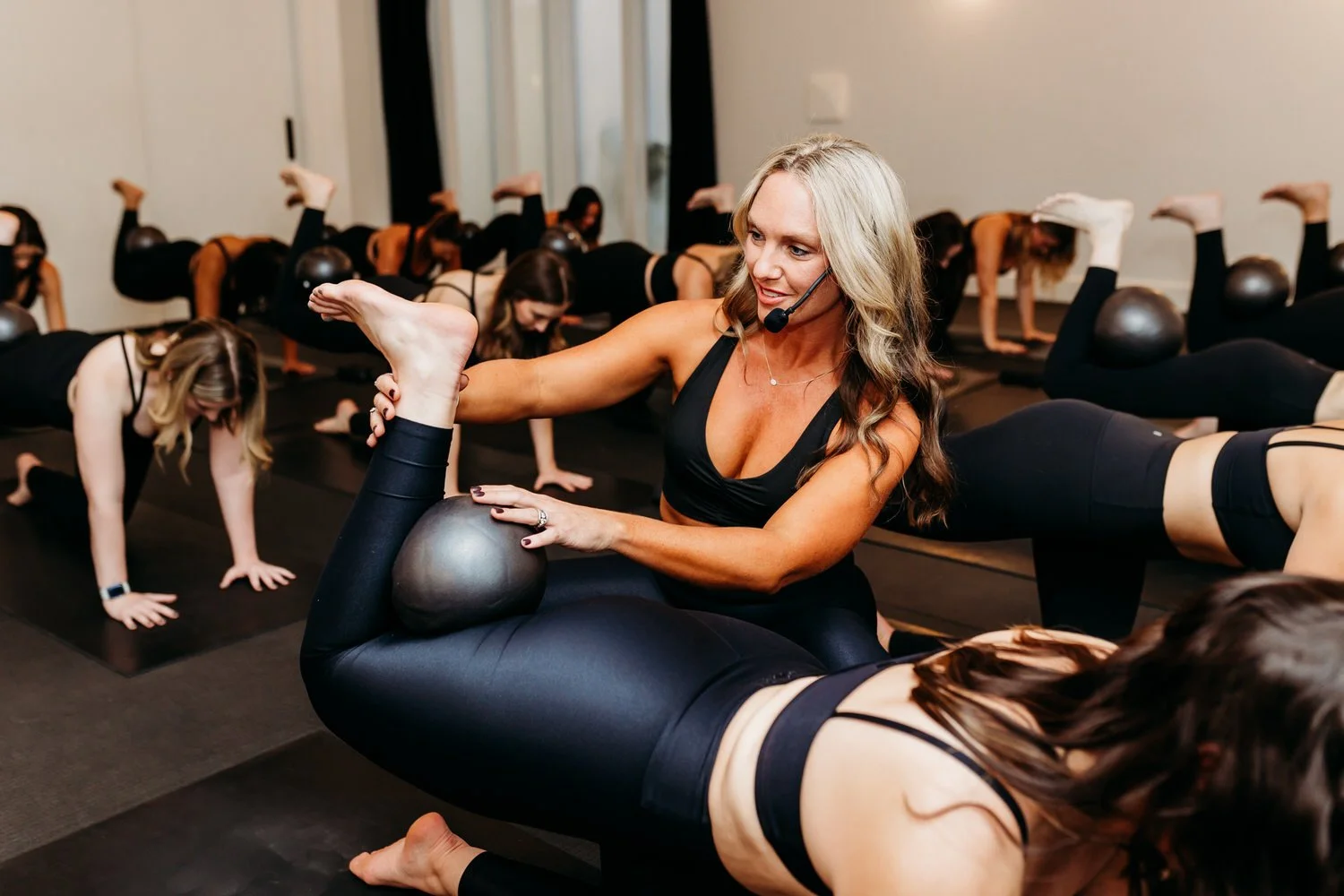
Key Takeaways
- The heat isn't a gimmick—it's a training tool. Exercising in an 85–95°F room forces your cardiovascular and thermoregulatory systems to work simultaneously, improving circulation, VO₂ max, and adaptability over time.
- Strength and mobility build together. Elevated tissue temperature combined with controlled, precise movement improves range of motion and joint stability—not by pushing further, but by training control at end range.
- You're training resilience, not just fitness. The structured stress cycle of Hot Pilates—effort, heat, recovery—mirrors how the body handles real-life stress, building composure and nervous system regulation alongside physical strength
Hot Pilates has become one of the fastest-growing studio formats in recent years. The room is warm, typically between 85 and 95 degrees. The air feels heavier, your heart rate rises sooner than you expect, and your muscles fatigue more quickly.
You might wonder: Is the heat simply adding intensity, or are there real scientific benefits?
The benefits of Hot Pilates aren’t just about sweating more. They stem from a combination of two well-established physiological principles: progressive resistance training and controlled heat exposure.
In the sections ahead, we’ll look at what current research suggests about the benefits of Hot Pilates, including muscular endurance, mobility, cardiovascular conditioning, stress regulation, and long-term resilience.
Table of Contents
What Is Hot Pilates?
Hot Pilates is a mat-based strength training class rooted in traditional Pilates principles—core control, precise alignment, controlled tempo, and time under tension—performed in a heated studio environment.
Unlike some yoga formats that emphasize long passive holds, Hot Pilates is structured around progressive loading through repetition and time under tension.
The defining variable is temperature. Most Hot Pilates classes are held in rooms heated to approximately 85–95°F. This elevated environment introduces an additional physiological demand: the body must regulate internal temperature while performing strength-based work.
That means two systems are training at once:
The musculoskeletal system through resistance and repetition
The thermoregulatory and cardiovascular systems through heat exposure
If you’d like a more detailed breakdown of how Hot Pilates works and how it compares to other formats, we cover that in our complete guide to Hot Pilates.
Benefit #1: Improved Muscular Endurance and Core Stability
One of the most well-documented benefits of Pilates-based training is improved muscular endurance, particularly in the muscles that support the spine and pelvis.
Unlike traditional strength training that often focuses on maximal load for short repetitions, Pilates emphasizes sustained time under tension. The movements are controlled with deliberate eccentric phases. Your stabilizing muscles remain active throughout transitions. Over the course of a class, those accumulated seconds under load create meaningful fatigue.
Studies examining Pilates interventions have found improvements in abdominal endurance, trunk stabilization, and functional movement performance. Participants demonstrated measurable gains in core strength and muscular control after only two one-hour Pilates classes per week over 12 weeks.
Hot Pilates builds on this foundation by incorporating thermoregulation.
Core stability is not aesthetic—it is structural. It supports spinal alignment, reduces compensatory movement patterns, and protects joints during daily tasks. The benefits you reap from hot Pilates carry into everyday life.
Benefit #2: Increased Mobility and Range of Motion
In a heated environment, muscle temperature rises more quickly. Warmer tissue generally demonstrates increased elasticity and improved neuromuscular efficiency, meaning muscles can contract and relax more fluidly. Increased blood flow to working muscles can also enhance oxygen delivery during high intensity intervals.
In Hot Pilates, mobility gains do not come from forcing deeper stretches. They result from combining:
Elevated tissue temperature
Controlled eccentric loading
Repeated movement through functional ranges
Strength and mobility develop together. When a muscle is trained to control a joint at end range, rather than simply reaching that range passively, stability improves alongside flexibility.
This matters for injury prevention. Mobility without control can create instability. Control without mobility can create restrictions. The heated environment supports tissue readiness, while the structured sequencing reinforces alignment and stability.
Benefit #3: Elevated Cardiovascular Demand With Low Impact
Hot Pilates is often categorized as strength training, but physiologically, it places meaningful demand on the cardiovascular system as well.
When you exercise in a heated environment, your body must regulate both muscular workload and internal temperature. To cool itself, the body increases blood flow to the skin through a process called peripheral vasodilation. At the same time, working muscles require oxygen-rich blood to sustain contraction.
The result is a higher heart rate at a given workload compared to exercising in a neutral-temperature environment.
Research on exercise in the heat shows:
Increased cardiovascular strain
Elevated heart rate response
Greater reliance on circulatory efficiency
Expanded plasma volume with repeated exposure
Over time, consistent training in heat can improve the body’s ability to manage this dual demand. Studies on heat acclimation demonstrate that VO2 max improves more in heated exercise environments than cooler ones.
In Hot Pilates, this means that controlled strength sequences can create a meaningful cardiovascular stimulus without the joint impact associated with running or plyometrics.
Benefit #4: Heat Acclimation and Physiological Adaptability
Studies on heat acclimation demonstrate that repeated sessions may lead to improved aerobic exercise performance, more efficient blood distribution, and reduced perceived effort during exertion.
With consistent exposure, the body may develop:
Increased plasma volume (the liquid component of blood)
More efficient sweat response
Improved temperature regulation
Reduced cardiovascular strain at similar workloads
An increase in plasma volume is particularly significant. It allows the heart to pump more efficiently with each beat, improving circulation and oxygen delivery during exercise. Over time, individuals may notice that movements that once felt overwhelming feel more manageable, not because the class became easier, but because the body became more efficient.
Keep in mind that adaptation is progressive. Early sessions will likely feel harder as your body learns to regulate temperature. But over time, with consistency, your conditioning will improve and you’ll feel more prepared for the challenge.
Benefit #5: Stress Regulation and Nervous System Reset
Exercise is often discussed in terms of muscles and endurance, but one of its most important benefits is neurological.
Hot Pilates creates a structured stress cycle:
Controlled physical demand
Elevated internal temperature
Sustained effort
Guided recovery
That cycle mirrors how the body processes stress outside the studio—activation followed by regulation.
Research consistently shows that regular exercise can reduce baseline cortisol levels, improve mood, and decrease symptoms of anxiety and depression.
Hot Pilates won’t magically eliminate stress from your life, but it does create a contained environment in which you practice managing it. Over time, that practice can translate into greater composure, improved focus, and a more stable baseline.
Benefit #6: Bone and Joint Support for Long-Term Resilience
Strength training plays a critical role in maintaining bone density and joint integrity, particularly for women as they age.
Research consistently shows that resistance-based exercise stimulates bone remodeling. When muscles contract against load, they create mechanical stress on the skeleton. In response, bone tissue adapts by reinforcing itself over time.
This process becomes increasingly important during perimenopause and post-menopause, when natural hormonal changes can accelerate bone density loss.
Hot Pilates contributes to this process through:
Repeated muscular loading
Isometric stabilization
Controlled weight-bearing positions
Axial loading through the spine and hips
Unlike high-impact training, which may not be accessible or sustainable for everyone, hot Pilates delivers resistance without joint pounding.
Strong bones, stable joints, and efficient movement patterns are foundational to longevity. They support balance, reduce fall risk, and preserve independence.
Training Resilience, Not Just Endurance
The effectiveness of hot Pilates is not because it feels intense. It’s effective because it layers controlled strength training with controlled environmental stress and your body adapts to both.
Hot Pilates does not promise quick transformation. But it does train resilience.
It teaches your system to handle demand and return to baseline efficiently. It builds capacity in ways that extend beyond the studio—into posture, endurance, composure, and recovery.
The heat isn’t the point. Adaptation is.
If you’re curious how your body responds to strength training in a heated environment, we invite you to experience a hot Pilates session at Collective Studios in Londonderry, NH.