
Lagree vs HIIT vs Strength Training: Which Delivers Better Results?
You’ve probably looked at a workout class schedule at some point and genuinely had no idea which one to pick. Many workout formats—such as Lagree, HIIT, and strength training—promise results and have devoted fans, but they seem completely different. So what actually works?
The honest answer: it depends on what you’re after. But if you’ve been cycling through workouts without a clear sense of why, or you’ve hit a plateau that no amount of effort seems to break through, it’s worth slowing down and understanding what each method actually does to your body.
This post breaks down Lagree, HIIT, and strength training side by side. You’ll walk away with a clear picture of how each training style works, what results you can realistically expect, and how to figure out which format—or which combination—fits where you are right now.
Table of Contents
What Is Lagree Training?
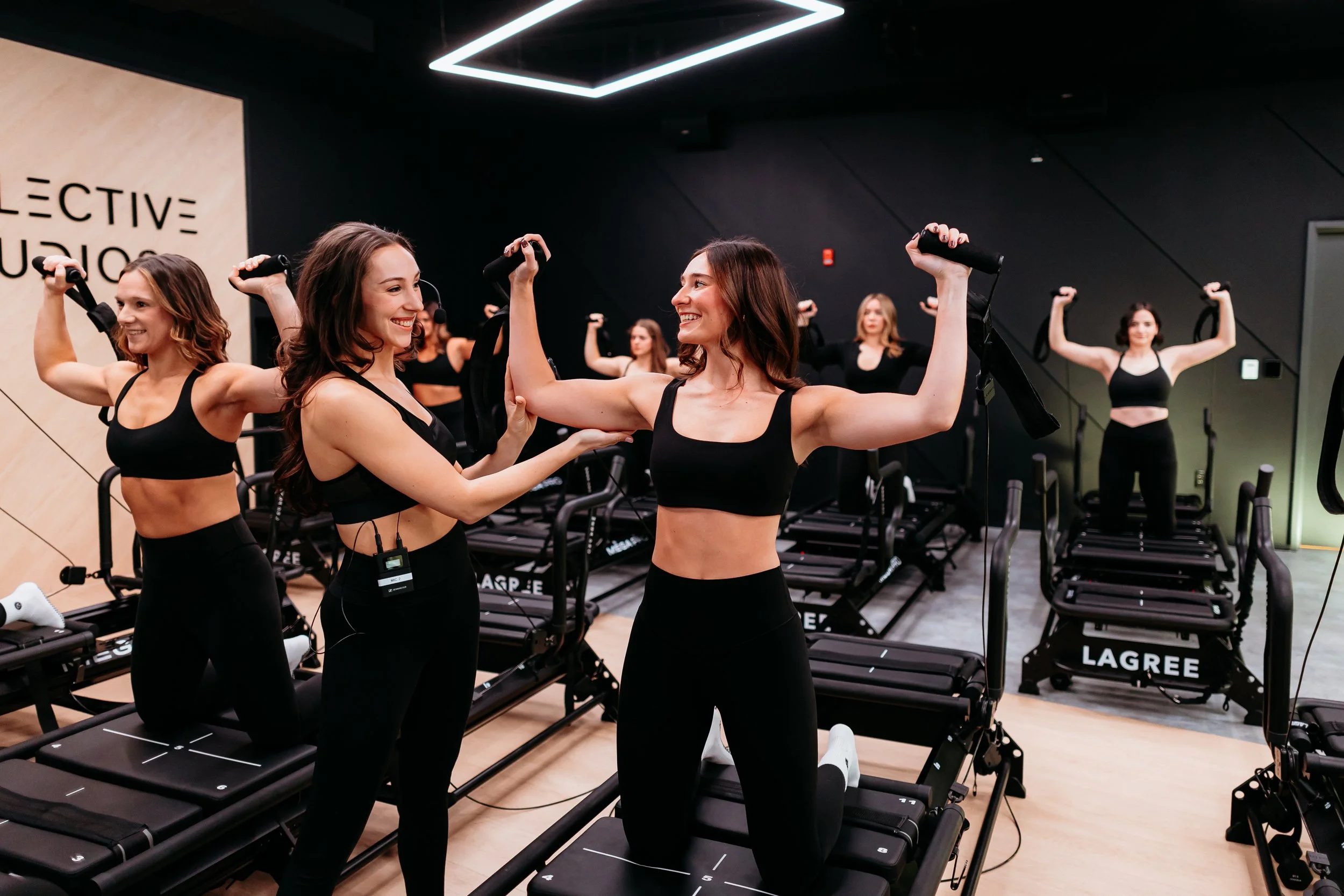
Lagree is a full-body training method built around one core principle: slow, intentional movement creates deeper, more lasting muscular change than fast, high-impact exercise. Developed by Sebastien Lagree in the early 2000s, the method is performed on a machine called the Megaformer—a spring-based platform that uses resistance, instability, and body weight to challenge your muscles in ways traditional gym equipment simply cannot replicate.
The key to Lagree’s effectiveness is time under tension. Rather than powering through reps quickly, you move slowly and deliberately, keeping your muscles under continuous load for extended periods. This targets slow-twitch muscle fibers, which are responsible for endurance, stability, and the kind of mobile, functional strength that carries you through real life. Most people feel the burn within the first few seconds of a movement and don’t get relief until the transition to the next one.
It’s also worth clearing something up: Lagree is not Pilates. While both are performed on spring-resistance equipment and emphasize core engagement, Lagree is significantly more cardiovascular, more intense, and more physically demanding than a classical Pilates class. A well-programmed Lagree class will push your heart rate, challenge your balance, and leave your muscles fatigued in a way that’s closer to a strength session than a stretch class.
What to Expect in a Lagree Class
A typical Lagree class runs 45 to 50 minutes and moves through a sequence of full-body exercises with minimal rest between transitions. The low-impact nature of the Megaformer means your joints aren’t absorbing the kind of shock they would in a run or a jump-heavy HIIT class—but don’t mistake low-impact for low-intensity. The format is deliberately designed to keep your body working from start to finish.
At The Collective Studios, the Megaformer experience goes beyond the workout itself. The environment is thoughtfully designed to help you disconnect from the noise of the day and move with focus, which can be just as valuable as the physical results. When the space feels good to be in, showing up becomes something you look forward to rather than something you force yourself to do.
Key Takeaway: Lagree combines cardiovascular intensity with deep muscular work at low joint stress, which makes it one of the few training methods that delivers on multiple fronts without asking your body to pay a high recovery price.
High-Intensity Interval Training
HIIT, or High-Intensity Interval Training, is exactly what it sounds like: short bursts of maximum effort followed by brief recovery periods, repeated across the duration of a workout. A typical HIIT session might alternate 40 seconds of all-out effort with 20 seconds of rest, cycling through movements such as:
Sprints
Jump squats
Burpees
Kettlebell swings
The format is time-efficient, requires minimal equipment, and has a substantial body of research behind its cardiovascular benefits.
The appeal is easy to understand. HIIT workouts are fast, they’re accessible, and they produce a noticeable response from your body almost immediately. Your heart rate spikes, you sweat, and you finish feeling like you worked hard (because you did). For building cardiovascular endurance and improving aerobic capacity in a short window of time, HIIT is genuinely effective.
That said, it’s not without tradeoffs. The high-impact nature of most HIIT formats puts meaningful stress on your joints, and the intensity demands near-maximum effort to deliver results, which means form often breaks down as fatigue sets in. For people who are newer to training, managing an injury, or navigating high stress levels in their daily lives, HIIT may ask more of the body than it can comfortably give.
The Hidden Cost of Always Going All-Out
Intense exercise is a physical stressor, and your body doesn’t distinguish between the stress of a brutal workout and the stress of a packed schedule, a difficult season at work, or a night of poor sleep. It all runs through the same system.
When you layer high-intensity training on top of life’s stressors, your body’s cortisol levels can remain chronically elevated. Over time, this can work against the very results you’re chasing: disrupted sleep, slower recovery, increased inflammation, and a body that holds onto tension rather than releasing it.
This isn’t an argument against intensity. It’s an argument for choosing intensity with intention. Understanding how your nervous system responds to your training is part of training smart. And that’s one of the reasons a lower-impact, high-output method like Lagree appeals to people who are already giving a lot to the rest of their lives.
Key Takeaway: HIIT is effective and time-efficient, but its high physical demand makes it hard to sustain consistently, especially when life is already running at full capacity. Intensity is only an asset when your body can actually recover from it.
Strength Training
Strength training is the practice of progressively overloading your muscles through resistance, whether you use free weights, machines, barbells, or your own bodyweight. The core principle is simple: challenge a muscle beyond what it’s accustomed to, allow it to recover, and it comes back stronger. Repeat that process consistently over time and the results compound in ways that go well beyond how you look in the mirror.
The benefits of regular strength training are some of the most well-documented in exercise science. It increases bone density, which becomes increasingly important as we age. It raises your resting metabolic rate, meaning your body burns more energy even at rest. It improves posture, joint stability, and functional movement, which is the strength that makes everyday tasks feel easier and reduces your risk of injury both in and out of the gym.
One of the most persistent myths around strength training is the fear of getting bulky. Building significant muscle mass requires a very specific combination of training volume, nutrition, and hormonal conditions that the average person isn’t accidentally going to stumble into. What most people actually experience from consistent resistance training is a leaner, more defined physique.
Why Strength Training Alone May Leave Gaps
For all its benefits, strength training has a narrower focus than many people realize. Traditional lifting programs are designed around isolated muscle groups and linear progression, which is excellent for building raw strength, but doesn’t necessarily develop the mobility, stability, or mind-body awareness that a well-rounded fitness practice requires.
Cardiovascular conditioning is also limited in most standard strength formats. Unless your program is specifically structured to keep your heart rate elevated—through circuits or minimal rest periods—you’re largely training one system at a time.
This is where pairing strength training with a complementary method pays off. Lagree, for example, fills in many of the gaps that traditional lifting leaves open: it challenges your cardiovascular system, builds stability through unstable resistance, and demands a level of body awareness that translates directly into better movement quality overall.
Rather than competing, Lagree and strength training complement each other.
Key Takeaway: Strength training is one of the most valuable things you can do for your long-term health, but it works best as part of a broader practice. Pairing it with a method that addresses mobility, stability, and cardiovascular conditioning fills in what lifting alone leaves out.
Lagree vs. HIIT vs. Strength Training: Side-by-Side Comparison
All three methods work. That’s the honest starting point. The question isn’t which is objectively best; rather, which one is best aligned with your goals, your body, and your life right now?
| CATEGORY | LAGREE | HIIT | STRENGTH TRAINING |
|---|---|---|---|
| Impact Level | Low | High | Medium |
| Primary Muscle Engagement | Slow-twitch muscles and deep stabilizers | Fast-twitch muscles and surface muscles | Progressive overload across major groups |
| Cardiovascular Benefit | Moderate–High | High | Low–Moderate |
| Injury Risk | Low | Higher | Moderate |
| Mind-Body Connection | High | Low | Moderate |
| Recovery Time Needed | Moderate | High | Moderate–High |
| Flexibility & Mobility | High | Low | Low |
| Joint Stress | Minimal | Significant | Moderate |
| Best For | Full-body tone, stability, mental reset | Cardio efficiency, time-pressed schedules | Raw strength, bone density, metabolic health |
A few things stand out when you look at this comparison table:
HIIT
Delivers the highest cardiovascular output of the three
Comes with the steepest recovery demands and greatest joint stress
Difficult to sustain at high frequency without accumulating wear and tear over time
Strength Training
Builds foundational physical capacity that supports everything else you do
Largely operates in isolation from cardiovascular health and mobility
Requires deliberate programming to address those gaps
Lagree
Delivers cardiovascular and muscular benefits simultaneously
Operates at low joint stress with built-in intentionality
The combination of cardio and muscular benefits and low joint stress is a significant reason why Lagree has such a devoted following
It’s also worth noting that these methods aren’t mutually exclusive. Many of our members at The Collective Studios complement their Megaformer practice with our LIFT or BURN formats. For some members, Lagree is their primary strength work, whereas for others, Lagree is what they do for active recovery.
How to Choose the Right Workout for Your Goals and Your Life Right Now
The best workout isn’t the one with the most impressive research behind it. It’s the one you’ll actually show up for consistently, over time, in a way that fits the life you’re actually living.
Before defaulting to whatever’s trending or whatever your most fit friend swears by, it’s worth asking yourself a few honest questions:
What are you actually training for? Raw strength and athletic performance could point toward a lifting-focused program. Cardiovascular efficiency and conditioning could mean HIIT is the right modality for you. Full-body conditioning, stress management, and sustainable intensity point toward Lagree.
What does your stress load look like? If your nervous system is already running hot—for example, if you have a demanding job, poor sleep, or you’re in a season of life that’s draining your energy—high-impact, high-intensity training might work against your recovery rather than support it.
What’s your injury history? Joint issues, chronic tension, or a history of overuse injuries are strong signals to prioritize low-impact methods that build strength without stacking additional stress on vulnerable areas.
What will you actually enjoy? Don’t underestimate the joy of movement. Enjoyment drives consistency, and consistency drives results. If you dread your workout, you’ll eventually stop going.
What does the environment feel like? Where you train matters more than most people admit. A space that feels intentional, welcoming, and well-designed lowers the activation energy of showing up, especially on the days when you’re not feeling motivated.
There’s No Single Right Answer, But There Is a Right Fit
The most effective fitness practices tend to be the ones built around a primary method that checks most of your boxes, supplemented by whatever fills the remaining gaps. For a lot of people, that looks like a Lagree-anchored routine with some strength work woven in. For others, it’s strength training as the foundation with Lagree sessions for active recovery and cardiovascular conditioning.
What matters most is that your training feels like a sustainable part of your life rather than a punishment, performance, or something you’re white-knuckling your way through. When you find the method and the environment that you enjoy, results will follow.
If you’re curious about what Lagree actually feels like, the best next step is to try a class. Explore Megaformer classes near you, give it a try, and see where it fits into your practice.
Frequently Asked Questions
Can I do Lagree and strength training in the same week?
Yes, and for many people, this is an ideal combination. Lagree targets slow-twitch muscle fibers and deep stabilizers, while traditional strength training focuses on progressive overload across major muscle groups. The two methods complement each other well without significant overlap, making them easy to pair across a weekly training schedule.
How many times a week should I do Lagree to see results?
Most people begin noticing meaningful changes with two to three Lagree sessions per week, combined with adequate recovery time between classes. Consistency over weeks and months matters far more than frequency in any single week. Starting with two classes per week and building from there is a smart approach for most beginners.
Is Lagree good for beginners?
Lagree is genuinely beginner-friendly despite its reputation for intensity. The low-impact format means your joints aren't under the kind of stress common in other high-output workouts, and resistance levels on the Megaformer are fully adjustable. Most studios, including The Collective Studios, offer instructor guidance throughout class to help new members find their footing.
What makes Lagree different from Pilates?
While both use spring-based resistance equipment and emphasize core engagement, Lagree is significantly more cardiovascular and intense than traditional Pilates. Lagree workouts are designed to keep your heart rate elevated throughout class while targeting slow-twitch muscle fibers through continuous time under tension — a combination that classical Pilates doesn't replicate.