
What to Expect at Your First Indoor Cycling Class
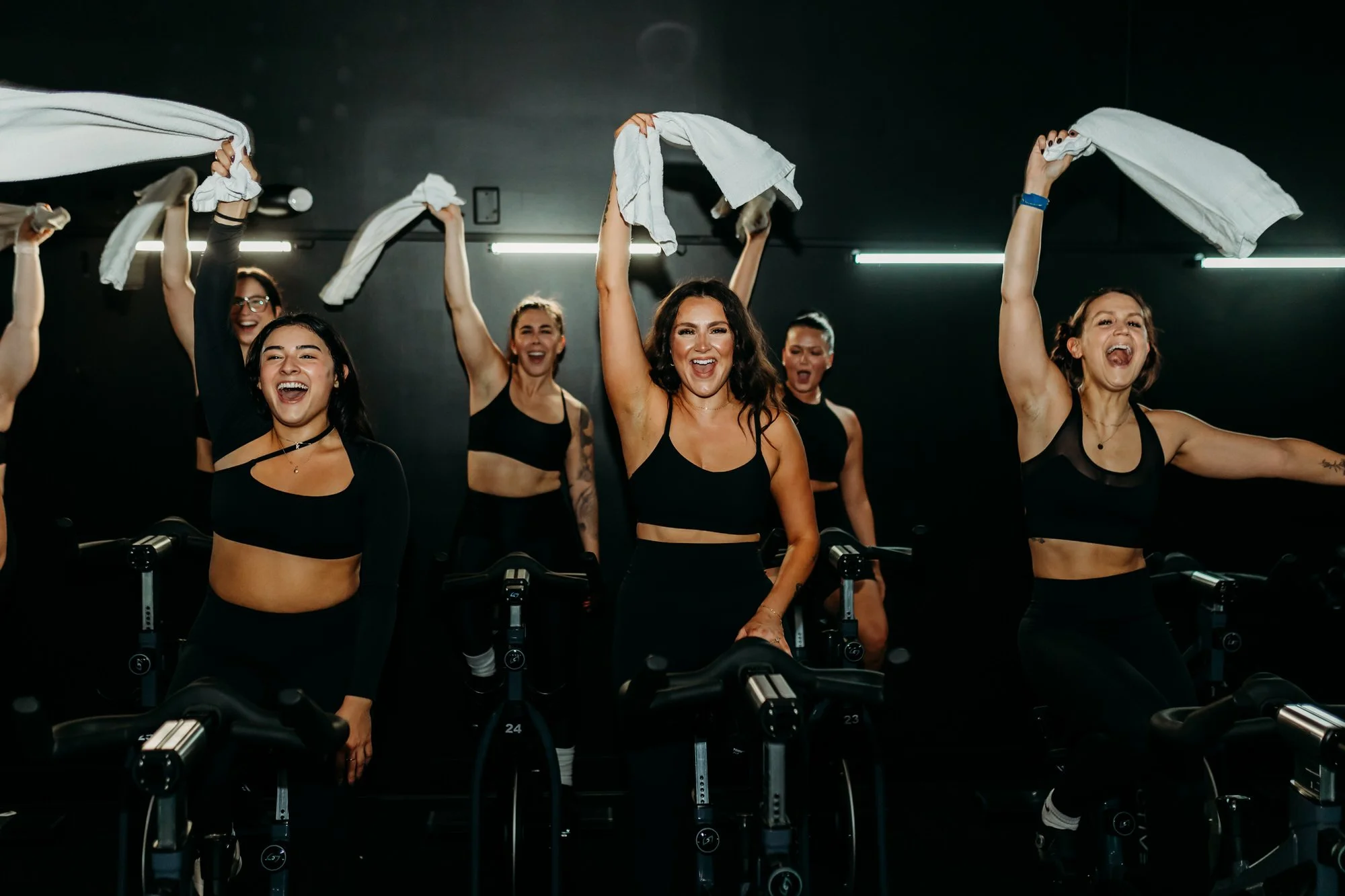
If you’ve been curious about indoor cycling but haven’t quite talked yourself into booking that first class, you’re not alone. Not knowing what to expect is one of the most common barriers to trying a workout class for the first time.
Boutique fitness studios know exactly what it feels like to walk through the door for the first time. Good instructors and front desk teams have seen every version of first-timer nerves, and taking care of new members—walking them through bike setup, explaining the shoes, answering every question—is genuinely part of the experience.
You won’t be left to figure it out alone, but having a little context when you walk in makes the experience even better. This post covers everything you need to know before, during, and after your first class so you can stop second-guessing and just book that bike.
Table of Contents
What Is Indoor Cycling? (And Is It Right for You?)
Indoor cycling is a group fitness format built around stationary bikes designed specifically for studio use. Unlike the upright bikes you’d find in a traditional gym, studio cycling bikes are built for performance, with weighted flywheels that create a smooth, road-bike-like feel, adjustable resistance, and a fit that can be dialed into your body before every class. The experience is led by an instructor who guides the room through a structured ride, typically set to music, with cues for resistance, cadence, and effort level throughout.
The format is genuinely accessible to a wide range of fitness levels. Because resistance is entirely self-regulated, you control how hard you work at every moment in class. There’s no minimum fitness requirement, no experience needed, and no way for anyone else in the room to know whether you’re pushing at full effort or pulling back, which helps take a bit of pressure off the first-time experience.
It’s also worth noting that indoor cycling is low-impact, meaning your joints aren’t absorbing the kind of repetitive shock that comes with running or jump-heavy formats. That makes it a strong option for people returning to fitness after a break, managing joint sensitivity, or simply looking for a high-output workout that doesn’t leave their knees paying for it the next day.
If you want a deeper look at what indoor cycling does for your body, the benefits of indoor cycling are worth exploring.
What to Do Before Your First Class
A little preparation goes a long way toward making your first indoor cycling class feel seamless rather than stressful. None of it is complicated, but knowing what to expect before you arrive means you can walk in focused on the experience rather than scrambling to figure out logistics.
Book in advance. Boutique cycling classes fill up fast, especially at peak class times. Reserving your spot ahead of time guarantees your place in the room and gives the studio a heads up that a new member is coming (which means the team can look out for you when you arrive).
Arrive 10 to 15 minutes early. This is probably the single most important thing a first-timer can do. Arriving early gives you time to check in, get oriented, meet your instructor, and get your bike set up properly before the room fills up and class begins. Showing up with two minutes to spare and trying to figure out clip-in shoes while everyone else is warming up is the version of this experience you want to avoid.
Hydrate well before class. Indoor cycling studios are warm, and the workouts are sweaty. Coming in already behind on hydration makes the ride harder than it needs to be. Drink water consistently in the hours leading up to class, and bring a full water bottle with you.
Eat something light beforehand. You don’t want to ride on a full stomach, but you also don’t want to be running on empty. A light snack 60 to 90 minutes before class—something with easy-to-digest carbohydrates—gives your body the fuel it needs without sitting heavy during the ride.
What to Wear to an Indoor Cycling Class
Comfort and practicality are the two things to optimize for here. Fitted or form-fitting bottoms work best, as looser shorts or pants can bunch against the saddle and become uncomfortable. Moisture-wicking fabrics make a meaningful difference in a format where you will sweat, and a fitted top will stay in place through the movements of the ride.
Leave the jewelry at home or keep it minimal, and pull long hair back securely. These are small things that become noticeable fast once you’re 20 minutes into a ride and focused on something other than adjusting accessories.
A Note on Cycling Shoes
Most boutique cycling studios use bikes with clip-in pedals, which are designed to work with cycling-specific shoes that lock into the pedal for a more secure, efficient ride. If you’ve never clipped in before, the idea can feel a little intimidating, but it takes about 30 seconds to learn, and instructors are used to walking first-timers through it before class.
At The Collective Studios, cycling shoes are available to rent if you don’t own a pair, so there’s nothing you need to purchase before your first visit. When you arrive early, your instructor or a team member will show you exactly how to clip in and how to clip out. It becomes second nature after a few classes.
How to Set Up Your Bike Correctly
Bike setup is one of those things that feels overly technical until someone explains it simply, and then it takes about two minutes. Getting it right matters, though.
A poorly fitted bike makes the ride uncomfortable, limits how effectively you can work, and over time can contribute to unnecessary strain on your knees, hips, and lower back. A well-fitted bike feels natural almost immediately and lets you focus entirely on the ride.
The most important thing to know: you don’t have to figure this out alone. Arriving early gives your instructor time to walk you through setup before class begins, and any good boutique studio will have someone available to help. Ask whenever you need to. Even experienced cyclists adjust their setup regularly, and there’s nothing unusual about wanting to get it right.
Seat Height
Seat height is the most important adjustment on the bike. As a general rule, your seat should sit at roughly hip height when you’re standing next to the bike. When you’re clipped in and your foot is at the bottom of the pedal stroke, your knee should have a slight bend—never fully locked out, but not deeply bent either. A seat that’s too low puts strain on your knees; too high and your hips will rock with each pedal stroke, which can cause injury.
Handlebar Height
Handlebar height is largely a matter of comfort, especially for beginners. A higher handlebar position keeps your torso more upright, which reduces strain on your lower back and makes the ride feel more manageable. As you become more comfortable on the bike over time, you may find yourself lowering the handlebars for a more performance-oriented position, but for your first class, prioritize comfort over anything else.
Fore and Aft Saddle Position
This adjustment moves your saddle forward or backward relative to the pedals. A simple way to check it: when your feet are clipped in and the pedals are level with each other, your front knee should be positioned roughly over the center of the front pedal. This alignment keeps your pedal stroke efficient and reduces unnecessary stress on the knee joint.
If any adjustments still feel off once you start riding, flag your instructor during the warm-up. Making a small correction in the first few minutes of class is far better than riding through discomfort for 45 minutes.
What Actually Happens During a Cycling Class
Once the lights dim and the music starts, the structure of a cycling class tends to follow a natural arc, and knowing that arc in advance makes the whole experience feel a lot more manageable. You’re not just pedaling hard for 45 minutes. There’s a beginning, a middle, and an end, and each part serves a distinct purpose.
The warm-up opens every class with lower resistance and a moderate pace, giving your muscles time to wake up and your body time to find its rhythm on the bike. Use this time to settle in, check your setup, and get comfortable with the feel of the pedals.
The main ride is where the work happens. This is the bulk of the class—typically 30 to 35 minutes—and it's structured around a mix of efforts designed to challenge yourcardiovascular system and full body. At The Collective Studios, cycle classes are choreography-driven, meaning your movements are mapped directly to the music. Expect to follow your instructor through beat-synced transitions between climbs, sprints, and interval-based efforts—where the drop of a song cues a surge in resistance, and the rhythm of the beat guides your cadence through every push and pull.
The cooldown brings the intensity back down gradually, allowing your heart rate to return to normal and your muscles to begin recovering. Most classes close with a short stretch sequence on or off the bike.
Understanding Resistance and Cadence
These are the two variables your instructor will reference throughout class, and understanding them removes a lot of the confusion first-timers experience.
Cadence refers to how fast you’re pedaling, measured in RPM (revolutions per minute). When an instructor cues you to speed up or slow down, they’re talking about cadence. A higher cadence feels like spinning quickly with less resistance; a lower cadence with more resistance feels like grinding up a hill.
Resistance is the load on the flywheel, which is controlled by a knob on your bike. Adding resistance makes each pedal stroke harder; reducing it makes the bike feel lighter. Your instructor will cue resistance changes throughout class, often using a scale or describing the effort level they’re targeting.
The key thing to understand about both: they’re always in your control. Your instructor’s cues are guidance, not requirements. If the resistance level they’re calling for feels like too much or too little, adjust it to where you can work hard but maintain good form. Riding your own ride is always the right call, especially in your first class.
What the Instructor Is Cueing and How to Follow Along
Cycling instructors develop their own cueing language over time, and some of it can sound like a foreign language the first time you hear it. A few common ones worth knowing:
“Find your base.” Settle into a moderate resistance and cadence that feels sustainable. This is your starting point for the effort that follows.
“Add two.” Turn your resistance knob a quarter turn to the right to increase the load. The number is relative, not an exact measurement.
“Push to the beat.” Match your pedal cadence to the tempo of the music.
“Hold your position.” Stay where you are in terms of resistance and cadence, even as the effort builds.
“Recover.” Back off resistance and cadence and let your body catch its breath before the next effort.
You won’t catch every cue in your first class, and that’s completely fine. Watch the instructor, follow the energy of the room, and trust that it gets easier to follow along with every class you take.
What to Expect After Your First Cycling Class
Here’s what to expect in the hours and days that follow and how to take care of yourself in between.
Rehydrate immediately. You’ve lost a significant amount of fluid during class. Start drinking water as soon as you clip out, and continue hydrating consistently for the rest of the day. If your class was particularly intense or you’re prone to cramping, an electrolyte drink can help replenish your body.
Eat something within an hour. Your muscles need protein and carbohydrates to begin the recovery process. A balanced post-workout meal or snack within 60 minutes of finishing class gives your body what it needs to repair and adapt, which is ultimately how fitness improvements happen.
Expect some soreness. If this is your first cycling class (or your first workout in a while), there’s a reasonable chance you’ll feel some delayed onset muscle soreness in the 24 to 48 hours that follow. This is completely normal. It’s your muscles responding to a new stimulus, and it tends to be most noticeable in your quads, hamstrings, and glutes. Gentle movement, stretching, and hydration all help move it along faster than rest alone.
Know that the second class is easier. Not just physically, but mentally too. The uncertainty that makes a first class feel demanding evaporates once you know what to expect. Most people find that by their third or fourth class, cycling starts to feel like something they’re genuinely good at.
Frequently Asked Questions
Do I need to be fit to take an indoor cycling class?
No prior fitness level is required for your first indoor cycling class. Because resistance is entirely self-regulated, you control how hard you work at every point in the ride. Instructors design classes to be scalable, and pulling back on resistance or cadence is always an option. The only requirement is showing up.
What should I eat before an indoor cycling class?
A light snack eaten 60 to 90 minutes before class works well for most people — something that combines carbohydrates for energy and a small amount of protein for sustained effort. A banana with nut butter, toast with eggs, or a small smoothie are all solid options. Avoid large meals in the two hours before class, as a full stomach makes the ride significantly less comfortable.
How long is a typical indoor cycling class?
Most boutique indoor cycling classes run between 45 and 50 minutes, including a warm-up and cooldown. Some studios offer shorter 30-minute express formats or longer 60-minute rides, depending on the schedule. At The Collective Studios, class lengths are listed at the time of booking so you can plan your day accordingly.
Will I be able to keep up in my first cycling class?
Yes, because keeping up looks different for everyone in the room. Resistance and cadence are personal, and no one can see how hard you're working from the outside. Your instructor will offer a range of effort levels throughout class, and riding at the lower end of that range while you find your footing is completely appropriate. Most first-timers are surprised by how manageable the class feels once they're actually in it.
How often should I take indoor cycling classes to see results?
Two to three classes per week is a strong starting point for most people. Consistency over time matters far more than how hard you push in any single session. If you're combining cycling with other training modalities, even one or two classes per week contribute meaningfully to your overall fitness when maintained consistently.
Are clip-in cycling shoes required for indoor cycling?
Clip-in shoes are used at most boutique cycling studios, including The Collective Studios, but you don't need to own a pair before your first class. Shoe rentals are available at the studio, and your instructor will walk you through how to clip in and out before class begins. If you find yourself coming back regularly, investing in your own pair becomes worth it over time.