
Low Impact Cardio Workouts That Work
Most people assume cardio has to be brutal to be effective. That if you’re not jumping, sprinting, or dreading every second of it, it isn’t really doing anything. That idea keeps a lot of people stuck in a cycle of either pushing through workouts that leave them beat up or avoiding cardio altogether because nothing feels sustainable.
Here’s what that assumption misses: intensity and impact are not the same thing. You can work hard, elevate your heart rate, and challenge your cardiovascular system without putting repeated stress on your joints. Low-impact cardio workouts make that possible—and for a lot of people, they’re actually the smarter path to results that last.
In this post, we’re breaking down what low-impact cardio really means, why it works, and which formats deliver a genuine full-body challenge. Whether you’re returning from an injury, looking for something you can actually stick with, or just tired of movement that leaves you more depleted than energized, there’s a better way to get your cardio in.
Table of Contents
What Is Low-Impact Cardio?
Low-impact cardio is any form of cardiovascular exercise where at least one foot remains in contact with the ground—or where the body is otherwise supported, as in cycling—eliminating the repeated ground-force impact that comes with running, jumping, or plyometric training. The joints absorb significantly less stress, but the cardiovascular system can still be working just as hard.
Low impact has a reputation for being the “easy” option—exercise reserved for beginners, the elderly, or people recovering from injury. In reality, impact level and intensity level are entirely separate variables. A heated Pilates class, a challenging cycling ride, or a flowing Yoga Sculpt session can push your heart rate into the same zones as a high-impact workout—without asking your knees, hips, and ankles to pay for it afterward.
So why do people tend to underestimate low-impact? Usually, it comes down to optics. High-impact movement looks harder. It sounds harder. But what matters for cardiovascular fitness isn’t how forceful the movement is; rather, what matters is the duration, resistance, tempo, and consistency. Low-impact cardio can deliver on all of those. And because it’s easier to recover from, it tends to be far more sustainable over time, which is ultimately what drives results.
The Real Benefits of Low-Impact Cardio
Choosing low impact doesn’t mean choosing less. It means choosing movement that works with your body instead of against it, and the benefits go well beyond just being gentler on your joints.
It protects your joints without limiting your output.
High-impact movement creates significant force through the knees, hips, and ankles with every landing. Over time, that accumulates—especially for people who train frequently. Low-impact cardio removes that repetitive stress without capping how hard you work. You can train at a high intensity, stay consistent throughout the week, and avoid spending your rest days managing soreness that was entirely avoidable.
It makes consistency actually achievable.
The most effective workout routine is the one you can maintain. High-impact training done too frequently leads to fatigue, overuse injuries, and the kind of burnout that sidelines people for weeks. Low-impact formats allow you to show up more often, recover faster, and build fitness progressively.
It still drives serious cardiovascular demand.
Resistance, heat, tempo, and duration are the levers that determine how hard your cardiovascular system is working—not whether your feet leave the ground. A cycling class with the resistance cranked, a hot Pilates session in a 95-degree room, or a fast-paced Yoga Sculpt flow can all push your heart rate into challenging zones and keep it there for the duration of class.
It supports the rest of your training.
Low-impact cardio doesn’t compete with strength work; it complements it. It builds endurance without breaking down the tissue your body needs to recover and adapt from resistance training. For people who are already lifting, it’s an effective way to add cardiovascular volume without digging a deeper recovery hole.
Key Takeaway: The best cardio workout is the one you can do consistently. Low-impact formats make that possible without asking your body to pay a price it can't afford.
Low-Impact Cardio Formats That Actually Deliver Results
Not all low-impact cardio is created equal. Format, environment, and intensity all shape what you actually get out of a session. The three formats below deliver real cardiovascular challenge—and they happen to be some of the most effective ways to move your body without the wear and tear that comes with high-impact training.
Indoor Cycling
Indoor cycling is a fantastic aerobic workout, one you do entirely seated. Because there’s no ground-force impact, the joints stay protected while your heart and lungs work hard. Resistance and tempo do the heavy lifting here: increasing the load on the bike mimics the effort of climbing, while faster cadences drive your heart rate up quickly and keep it there.
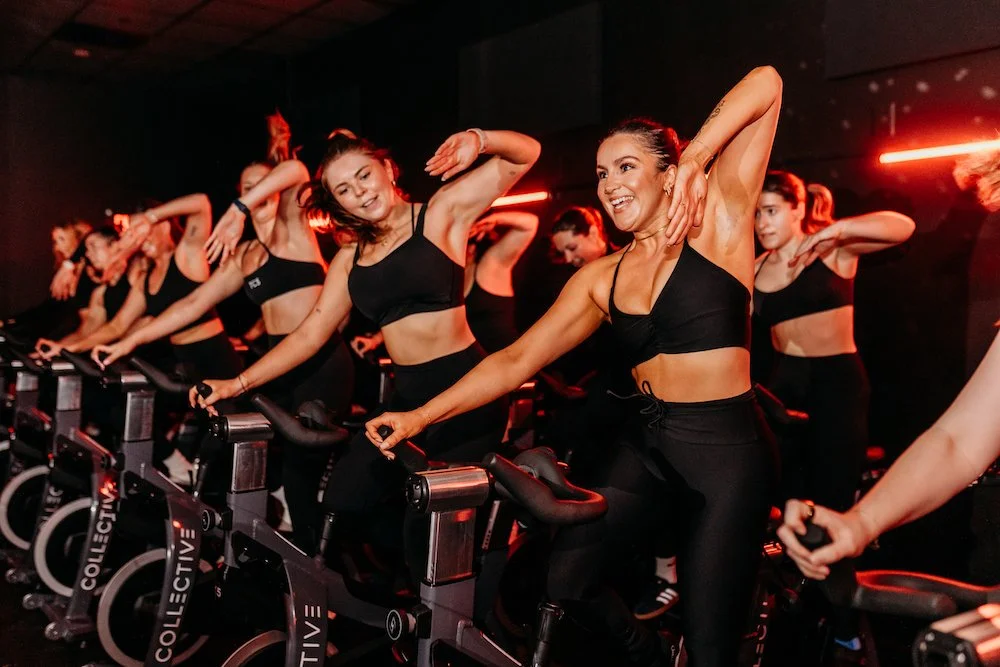
A well-programmed cycling class uses interval-style structure—pushing hard, pulling back, pushing again—which is one of the most effective formats for building cardiovascular fitness over time. Indoor cycling can also build serious lower-body endurance in the process. At The Collective Studios, cycling classes are designed to be as much about energy and experience as they are about effort. The music, the pace, and the people in the room make it the kind of workout that goes faster than you expect and leaves you feeling more accomplished than depleted.
Hot Pilates
Hot Pilates takes the precision and intentionality of traditional Pilates and adds heat, which ups the ante. Classes are practiced in a room heated to around 95 degrees, which elevates cardiovascular demand from the moment you walk in. Your heart rate rises to help regulate body temperature and remains elevated throughout class as you move through a sequence of controlled, low-impact exercises.
The workout itself targets the deep stabilizing muscles of the core, hips, and posterior chain, which are the muscles that support posture, protect the spine, and create the kind of functional strength that carries over into everyday life. Because the movements are deliberate and controlled rather than explosive, there’s no jumping, no pounding, and no impact on the joints. What you get instead is a full-body challenge that builds strength and cardiovascular fitness at the same time, in a way that leaves you feeling worked rather than wrecked.
Yoga Sculpt
Yoga Sculpt sits at the intersection of flow, strength, and cardio. Classes move through sequences of yoga-inspired postures with an added resistance component, keeping the body continuously engaged and the heart rate elevated throughout class. The transitions between movements are what drive the cardiovascular demand; there’s rarely a moment of complete stillness, which means your system stays challenged from start to finish.
What sets Yoga Sculpt apart from other low-impact formats is the range of what it delivers in a single session. You’re building cardiovascular endurance, developing strength through bodyweight and light resistance work, improving mobility, and moving through a fitness modality that requires focus and presence.
At The Collective Studios, Yoga Sculpt is part of a broader fitness philosophy built around the idea that movement should challenge you and restore you at the same time.
| FORMAT | IMPACT LEVEL | CARDIO INTENSITY | KEY BENEFIT |
|---|---|---|---|
| Indoor Cycling | Low | High | Cardiovascular endurance, full body strength |
| Hot Pilates | Low | Moderate–High | Core strength, full-body stability, heat-driven cardio |
| Yoga Sculpt | Low | Moderate–High | Strength, mobility, and cardio in one session |
How to Get the Most Out of Low-Impact Cardio Classes
The format matters, but so does how you approach it.
1. Show Up Consistently
The compound effect of three to four low-impact sessions per week will outperform sporadic high-impact training almost every time. Cardiovascular fitness builds gradually and incrementally. It responds to regular stimulus rather than occasional intensity. Because low-impact formats are easier to recover from, showing up on a frequent enough basis is actually realistic. And that consistency is what leads to results.
2. Vary Your Formats
Cycling, hot Pilates, and Yoga Sculpt each challenge the body in different ways—different muscle groups, different ranges of motion, different cardiovascular demands. Rotating between them across the week keeps the body adapting and prevents the kind of plateau that comes from doing the same thing repeatedly. It also makes the routine easier to sustain because no two sessions feel exactly alike.
3. Use the Intensity Levers Available to You
Low-impact doesn’t mean low effort, but you have to be intentional about it. On the bike, that means adjusting resistance rather than just spinning faster. In a heated class, it means staying present in the movements rather than just getting through them. In a Sculpt session, it means controlling the tempo of each transition rather than rushing to keep up. The format creates the conditions, but your effort determines the outcome.
4. Treat Recovery As Part of the Process
One of the advantages of low-impact training is that it gives you clearer feedback from your body. It’s easier to distinguish productive fatigue from genuine overreach. Use that information.
Pair your cardio sessions with adequate sleep, hydration, and mobility work, and your body will adapt faster than it would under a higher-stress training approach.
Remember that recovery isn’t the opposite of progress—it’s where progress actually happens.
Frequently Asked Questions
Is low-impact cardio effective for improving cardiovascular fitness?
Yes. Low-impact cardio can be just as effective as high-impact training for improving cardiovascular fitness. Heart rate, duration, resistance, and consistency are what drive adaptation — not impact level. Formats like indoor cycling and hot Pilates can elevate your heart rate into challenging zones and sustain it there for an entire session, delivering meaningful cardiovascular benefits without joint stress.
How often should I do low-impact cardio workouts each week?
Three to four sessions per week is a strong target for most people. Because low-impact formats are easier to recover from than high-impact training, that frequency is realistic and sustainable for most schedules. The key is consistency over time — regular, moderate effort will build cardiovascular fitness more effectively than occasional intense sessions with long gaps in between.
Is indoor cycling considered low-impact?
Yes. Indoor cycling is a low-impact exercise because the body is supported by the bike seat and the feet never leave the pedals, eliminating ground-force impact on the joints. Despite being low-impact, cycling can be highly intense, as resistance and cadence are the primary variables that determine how hard the cardiovascular system is working during a class.
What is hot Pilates and is it a good cardio workout?
Hot Pilates is a Pilates-based workout practiced in a heated room, typically around 95 degrees. The heat elevates cardiovascular demand by raising the heart rate to help regulate body temperature, while the movements themselves build core strength and full-body stability. It functions as both a strength and cardio workout, making it an efficient option for people who want both benefits in a single session.
What is the difference between low impact and low intensity?
Low impact refers to the physical force placed on the joints during movement — low-impact workouts minimize that force. Low intensity refers to how hard the cardiovascular system is working. The two are independent of each other. A workout can be low-impact and high-intensity at the same time, which is exactly what makes formats like indoor cycling and hot Pilates so effective.
The Smarter Way to Keep Moving
Low-impact cardio workouts aren’t a lesser version of the real thing—they’re a smarter approach to building cardiovascular fitness that lasts. When intensity is driven by resistance, heat, tempo, and consistency rather than impact, the body gets challenged without the accumulated wear that sidelines so many people over time. The result is a training approach you can actually sustain, week after week, in a way that keeps challenging you.
Indoor cycling, hot Pilates, and Yoga Sculpt are three of the most effective low-impact cardio formats available at our Londonderry studio. If you’ve been looking for a way to move that challenges you without leaving you depleted, give our intro offer a try.